Journal of Threatened
Taxa | www.threatenedtaxa.org | 26 July 2026 | 18(7): 29212–29225
ISSN 0974-7907 (Online) | ISSN 0974-7893 (Print)
https://doi.org/10.11609/jott.10275.18.7.29212-29225
#10275 | Received 24 November 2025 | Final received 19 April 2026 |
Finally accepted 25 June 2026
A decadal study on the waterbirds and an analysis of the declining species in Perur-Sundakamuthur Lake, Coimbatore, Tamil Nadu, India
G. Parameswaran 1 , R. Sivashankar 2 & R. Vridhi 3
1 438/11, Mayflower Apartments,
130, Vivekananda Road, Ramnagar, Coimbatore, Tamil
Nadu 641009, India.
2,3 5690/18, Halasova,
Jihlava, 58601, Czech Republic.
1,2,3 Kovai
Birders, Coimbatore, Tamil Nadu, India.
1 shivanparam@gmail.com, 2 sivas754@gmail.com
(corresponding author), 3 vridhi2space@gmail.com
Editor: H. Byju,
Coimbatore, Tamil Nadu, India. Date of publication: 26 July 2026
(online & print)
Citation: Parameswaran, G., R. Sivashankar
& R. Vridhi (2026). A decadal
study on the waterbirds and an analysis of the
declining species in Perur-Sundakamuthur Lake,
Coimbatore, Tamil Nadu, India. Journal of
Threatened Taxa 18(7):
29212-29225. https://doi.org/10.11609/jott.10275.18.7.29212-29225
Copyright: © Parameswaran et al. 2026. Creative Commons Attribution 4.0
International License. JoTT allows unrestricted use,
reproduction, and distribution of this article in any medium by providing
adequate credit to the author(s) and the source of publication.
Funding: Self-funded.
Competing interests: The authors declare no competing interests.
Author details: G. Parameswaran received his engineering education from PSG College of Technology, Coimbatore. His interests are bird watching, conservation of habitat through citizen science, understanding our history and cultural heritage. He is a graduate of the Seattle Audubon’s Masterbirder Programme. He is currently retired and lives in his hometown of Coimbatore. R. Sivashankar is a Mechanical Engineering graduate working in the automotive sector since his graduation in 2012. His other interests are bird watching, understanding the environment through systematic data collection, exploration of South-Indian history and its culture.Vridhi R is a Software Engineer who graduated from Coimbatore Institute of Technology. She has been part of several outreach programs in schools and offices, to spread the message of environmental conservation through bird watching. Her other interests include reading and traveling.
Author contribution: Parameswaran conceived the study, collected the data and references. R. Sivashankar handled the data, and its computational aspects. Vridhi. R co-authored and edited the manuscript of the Supplementary text with G. Parameswaran, while R. Sivashankar designed the species’ data dashboard. All the authors contributed equally to the interpretation of the results, the preparation of the manuscript and its correction.
Acknowledgements: All the authors would like to dedicate this publication to Mr. Dilip Joshi and Mr. Sai Vivekanand. This is to acknowledge their long-term contributions primarily in the area of data collection during the monthly surveys. We are extremely grateful to their unstinting support.
Abstract: The results of a decade-long
systematic monthly monitoring of birds in Perur-Sundakamuthur
Lake, an urban wetland in Coimbatore, Tamil Nadu, conducted from May 2014 to
April 2024, are presented. The status and population trends of 129 species that
comprise 51 waterbirds and 78 non-waterbirds
were analysed. The analysis was focused solely on 37
species of waterbirds by categorising
them into 10 guilds. Of these, seven species were each treated as a separate
category based on their distribution status. Among them, 65% of the species
were present in high numbers when the water level was medium. Also, about 78%
of the winter migrant ducks and shorebirds were present only during the
aforesaid condition, feeding on the shallow pools and moist mudflats. The abundance
of 73% of the analysed waterbird
species declined, ranging from 3% to 99%. The population of shorebirds and
winter migrant ducks declined by 67% and 99.5%, respectively. From the
findings, it is believed that maintaining full water levels in the wetland to
aid commercial fishing is the most probable reason for the decline of these
winter migrants. Monthly bird counts are suggested in the wetlands of greater
Coimbatore to expand the scope of long-term monitoring of the urban avian
population.
Keywords: Anthropogenic disturbance, avian
population trends, foraging guilds, habitat heterogeneity, long-term
monitoring, migratory waterfowl, wetland management.
Introduction
Many ecosystems, at scales
ranging from local to global, are now heavily human-influenced and are
undergoing large, far-reaching changes that have extremely negative
consequences for human well-being (Millennium Ecosystem Assessment 2005a; Biggs
et al. 2010; Intergovernmental Panel on Climate Change (IPCC) 2021; Mundkur et al. 2023). The loss of habitat through human
action and resource extraction impacts wildlife population, including birds (Şekercioğlu et al. 2004; Lees et al. 2022; Parameswaran et al. 2023a; Byju
et al. 2024a).
Birds contribute many important
ecological functions through their roles as predators, pollinators, scavengers,
seed dispersers, and ecosystem engineers. Many of these ecosystem functions
also translate to ecosystem services such as supporting fish and fibre, water purification, climate and flood regulation, along
with recreational opportunities (Millennium Ecosystem Assessment 2005b; Whelan
et al. 2008; Şekercioğlu 2010). The abilities of
birds to fly and migrate long distances enable them to respond to eruptive
resources and to connect varying landscapes in ways that other organisms cannot
(Şekercioğlu et al. 2016), as they are one of the
reliable indicators of biodiversity and ecosystem health (Frazier 1999; Gregory
et al. 2003; Gregory & Van Strien 2010; Fraixedas et al. 2020; Mundkur et
al. 2023).
Wetlands constitute some of the
most productive ecosystems in India, and their health is often correlated with
the waterbird communities that play vital roles in
their effective functioning (Millennium Ecosystem Assessment 2005b; Raju 2015).
In urban areas, inland wetlands remain some of the last natural ecosystems that
not only provide refuge to a wide variety of flora and fauna but also offer
important space for humans to interact with nature (Raju 2015). Also, inland
wetlands are extremely important for migratory waterbirds
either as resting locations or wintering grounds (Mundkur
et al. 2023). Although many urban wetlands in India are extremely polluted,
they still attract a large number of birds (Parameswaran
et al. 2023a). Urban wetlands are also continuously disturbed by development
activities, which affect their bird populations (Fluet-Chouinard
et al. 2023). In Tamil Nadu, fast-growing cities like Coimbatore still have
some wetlands with a good bird population. A few earlier studies relating to
birds on some of the Coimbatore lakes are from Singanallur
(Reginald et al. 2007; Guptha et al. 2011), Ukkadam (Guptha et al. 2011;
Kumar et al. 2014), Perur (Parameswaran
& Sivashankar 2018; Parameswaran
et al. 2023a), Kuruchi, Valankulam,
and Sulur (Guptha et al.
2011), and Chinnavedampatti (Kumar et al. 2025).
The primary aim of this study is
to monitor the waterbird population and their changes
in terms of conservation perspective in Perur-Sundakamuthur
Lake (hereinafter, Perur Lake), Coimbatore, for a
decade. In order to effectively analyse the data, a
methodology was devised to define the distribution status of the waterbird species, focusing on common waterbirds
that frequent the lake. The population changes of the common waterbird species were closely analysed
in association with local threats occurring at the lake. Perur
Lake was chosen for its size and accessibility to conduct continuous bird
monitoring, representing one of the lakes in a fast-developing urban area.
Study area
Perur Lake (10.970º N, 76.928º E) lies
in the southwestern corner of metropolitan Coimbatore, Tamil Nadu. It is a
freshwater wetland and part of a network of approximately 30 interconnected
lakes constructed during the Kongu-Chola regimes in
the 8th–9th centuries CE within the Noyyal
River basin (Pragatheesh & Jain 2013). These
lakes were designed to regulate monsoon floods, store surface runoff, and
enhance groundwater recharge in this semi-arid region. Over time, this wetland
of the Noyyal Basin has developed into an
ecologically important habitat supporting diverse assemblages of birds, fishes,
molluscs, and other aquatic biota. In addition to
supplying irrigation water, they provide ecosystem services such as flood
mitigation, groundwater recharge, nutrient retention, water purification, and
biodiversity conservation. In short, its ecological function is primarily to
act as a flood plain for the river Noyyal Basin with
its attendant flow.
The lake has a catchment area of
5.768 km² and receives inflow through a single channel from the Kuniyamuthur Anicut, which conveys surplus water from the
upstream Ganganarayanasamudhram Lake. The wetland has
seven outlets (one weir and six sluices) and a surplus escape channel of 35.67
m. Water levels fluctuate seasonally depending on rainfall, influencing habitat
structure and waterbird assemblages (Pragatheesh & Jain 2013). The eastern margin of the
lake is bordered by a crescent-shaped bund, approximately 2 km in length, which
was formerly vegetated and walkable but has since been converted into a two-lane
roadway with a containment wall that partially encroaches into the wetland. The
southwestern shoreline supports trees and emergent vegetation used by birds for
roosting and occasional nesting, and remains largely inaccessible except during
dry periods. The western edge of the lake gradually transitions into
agricultural land (Parameswaran et al. 2023a).
Owing to the absence of major
industrial activity and sewage inflow, Perur Lake
remains relatively unpolluted (Mohanraj et al. 2000;
Chandra et al. 2009). Invasive aquatic macrophytes such as Eichhornia
crassipes are absent, although floating plants,
including water lilies (Nymphaeaceae), occur
sporadically. This lake is subjected to anthropogenic pressures such as sandmining, commercial fishing (ongoing), road construction
and encroachment (Pragatheesh & Jain 2013; Parameswaran et al. 2023a).
Materials
and Methods
Perur Lake was monitored once a month
from May 2014–April 2024, usually on second Saturdays by walking on a fixed 2
km road transect in the morning at 0700–1000 h, counted all birds that were
seen or heard and recorded the information in a checklist. This method can be
characterized as a “total count”. Binoculars (Nikon 10 x 42.5, Zeiss 10 x 42
& Eagle Optics 10 x 42), a spotting scope (Bausch & Lomb 20–80 x
magnification), and cameras were used for the monitoring and documentation. The
number of volunteers who participated in the count on any given day varied from
three to eight. During the decade, there were 108 actual monthly counts
conducted, amounting to c. 900 h of volunteer time. Of the counts missed, four
were due to sand mining operations between June and September 2017, and the
rest were due to COVID-19 restrictions in 2020 and 2021.
The standard field guides (Ali
& Ripley 1968a,b,c,d; Hayman et al. 1986; Kazmierczak
2000; Ali 2002; Paulson 2005; Grimmett et al. 2011;
Rasmussen & Anderton 2012) were used to identify birds. Birds were categorised as follows: resident (R): a species that stays
year-round but also breeds in the area (e.g., Indian Spot-billed Duck Anas poecilorhyncha). Local migrant (LM): a species that
stays in the area throughout (or most of) the year and whose adult population
moves outside the area to breed. Occasionally, when resources are available,
these species may also breed in the area (e.g., Lesser Whistling Duck Dendrocygna javanica).
Winter migrant (WM): a species that spends its non-breeding winter months
(mostly from September–April) in the area (e.g., Wood Sandpiper Tringa glareola).
Passage migrant (PM): a species that is present between February–April and
September–November in the area. Uncertain (U): a species that occasionally
visits an area and whose pattern cannot be discerned (e.g., Woolly-necked Stork
Ciconia episcopus).
To enable integrated analysis of waterbird
population, especially winter migrants, the ‘wetland year’ is calibrated from
May of the current year to April of the succeeding year.
To quantify and determine the
distribution status of each species, a method was adopted based on the field
experience (Parameswaran et al. 2023a). The bird
categories were split into two, namely, waterbirds
and non-waterbirds. Parameters such as reporting
frequency (RF) and mean count (MC) were defined as follows:
RF = No. of surveys that have the
species / Total no. of surveys
MC = Total count of the species
in all surveys / Total no. of surveys
By multiplying MC and RF, the
benchmark value for each species was obtained. The species with the highest
benchmark value for that category (waterbird / non-waterbird) was designated as the Benchmark species. The
population index (PI) of each species was calculated as PI = mean count of the
species / mean count of the benchmark species. Finally, the distribution status
given as a percentage is calculated by the formula [(RF + PI)/2] * 100 (Table 1A), and the distribution status of
each species is determined. Some examples of waterbirds
and non-waterbirds are provided in Table 1B.
Prior to the start of every
count, the water level is estimated visually (Table 2). We then obtained the
corresponding mean count (MC) for every water level, which was calculated using
the formula given below:
MC of a species per water level =
Sum of all counts of a species in that water level / Number of surveys in that
water level.
During surveys, potential threats
(threat events) were documented within the wetland and associated the threats
with the months. Both waterbird species diversity
were compared, as well as population numbers before and after a threat event,
to assess the impact of the threat. For
this analysis, we eliminated the species whose distribution status is rare,
because they are less than 10% of the distribution status (Table 1A) and
categorized the rest of the waterbirds into guilds
(Pearce et al. 2007), primarily based on order and secondarily on their yearly
mean population trend. Some individual species are treated separately and not
included in the guilds, as their yearly mean population trend is significantly
different from that of the waterbirds in the same
order.
The mean of their population
counts was calculated for the first five years (May 2014–April 2019) and the
next five years (May 2019–April 2024) and used the difference in their
percentages to show the population decline. A sparkline or a trend line graph
of the annual mean over the decade was drawn for all guilds and individual
species. The annual population change with the standard error and compared it
with the global trends from the International Union for Conservation of
Nature’s Red List of Threatened Species (IUCN 2025-2) and national current
annual trends during 2014–2020 available from the State of India’s Birds (SoIB 2023). The IUCN 2025-2 and SoIB
2023 were chosen because their periodicity significantly overlaps with our
study.
A detailed annotated checklist
with bar charts that represents the presence/absence of the species across the
year, line graphs depicting population trends, and notable differences from
existing literature are provided in the supplementary dataset archived on Zenodo (Parameswaran et al.
2025). The software used to plot graphs and visualizations are Microsoft Power
BI and Microsoft Excel.
Results
Around 129 species of birds
(Table S5 in the supplementary dataset (Parameswaran
et al. 2025) were recorded in Perur Lake, including
51 species of waterbirds (Table 3). The 51 waterbird species comprise 14 residents, 14 local migrants,
13 winter migrants and 10 of uncertain status (Table 4). The list was pared
down to 37 species by eliminating 14 species falling under the rare category.
The 37 species are further categorized as 10 guilds comprising 30 species and
seven species treated individually. The reason that five out of these seven
species, such as Indian Spot-billed Duck Anas poecilorhyncha,
Asian Openbill Anastomus oscitans, Eurasian Coot Fulica
atra, Lesser Whistling Duck Dendrocygna
javanica, and Glossy Ibis Plegadis
falcinellus, were treated individually because
their inclusion in a guild would dominate and mask the data of the entire guild
(Adhurya et al. 2019). In the context of Perur Lake, the other two species, such as Little Grebe Tachybaptus ruficollis
and Whiskered Tern Chlidonias hybrida, are singular by their very nature and
therefore cannot be included with the rest of the analysed
waterbirds.
The first year of the study,
2014–2015, had the highest mean waterbird population
of 732 birds per month. This population dropped in subsequent years to the
level of 123.5 in 2017–18 and followed by a slow revival from 2021–22 until the
last year of this study, when the second-highest mean population of 629 birds
per month was recorded in 2023–24. Similarly, the first two years, 2014–15
& 2015–16 registered the highest mean species diversity of 22.8 per month,
dropping to the lowest of 15.4 in 2020–21 and increasing to 19.8 in 2022–23 and
2023–24. Image 1 provides the trend of monthly waterbird
counts across the ten years and their corresponding water levels and threats
due to anthropogenic actions. Image 2 provides the yearly waterbird
population trend and waterbird species diversity over
the decade.
Impact of water levels
The highest counts of waterbirds were obtained when the water level of the lake
was ‘Medium’ (Image 3), when large flocks of dabbling ducks like Indian
Spot-billed Duck Anas poecilorhyncha, egrets
like Little Egret Egretta garzetta, and shorebirds like Wood Sandpiper Tringa glareola
were seen feeding in the mudflats, shoreline and shallow water pools. Of the 37
waterbirds analysed, 24
(65%) are present in high numbers when the water level is Medium (Image 4).
Decline of waterbirds
The population of several waterbird species and their corresponding guilds declined
steeply in Perur Lake during the study period,
sometimes resulting in total disappearance (Table 5). Overall waterbird numbers declined by 14% during the decade. The
decline was 60.4% during the first nine years, i.e., from May 2014 to April
2023 (Image 2).
From the analysis of data
provided in Table 5 for the waterbird guilds and
individual species, we would like to restate that 73% of the waterbirds have declined in population, ranging 3–99 %
(Table 6). Winter migrant ducks and shorebirds are highly affected waterbirds with a population decline of above 85%.
Discussion
The decadal study emphasizes the
importance of monitoring common waterbirds. Their
population levels and breeding status are good and reliable indicators of
biodiversity and ecosystem health of wetlands (Gregory et al. 2003; Whelan et
al. 2008; Gregory & Van Strien 2010; Parameswaran et al. 2023a; Byju
et al. 2024b). The steep increase in the waterbird
population during the tenth year is primarily due to the irruption in the
numbers of the two waterbirds, which are Indian
Spot-billed Duck Anas poecilorhyncha (560%
increase) and Asian Openbill Anastomus oscitans (700% increase). The possible explanation for
this increase is due to the favourable water level
condition over two-thirds of the period during the tenth year, i.e., either
medium or low (Parameswaran et al. 2023a, 2025; Byju et al. 2025d). When these two birds mentioned above
are removed from consideration, then the population decline of the rest of the waterbirds is 61.5% over the decade.
The winter migrants, which
comprise exclusively of ducks and shorebirds, have declined the most in Perur Lake. This is also the trend nationally in India,
according to SoIB (Table 5). The rate of decline is
noticeably larger in Perur Lake than national trends;
for example, in the case of Garganey Spatula querquedula,
the highest decline as per SoIB is 6.84% annually,
whereas in Perur Lake it is 12.7%. Therefore, local
anthropogenic activities have also most likely played a significant role in
contributing to this decline (Parameswaran et al.
2023a; Byju et al. 2024a). According to Evans et al.
(2008), local factors are more influential than regional ones and, by logical
extension, national and international factors.
Impact of
anthropogenic actions
Anthropogenic actions in Perur Lake can be broadly categorized as follows:
Commercial fishing
The commercial fishing operation
was started in October 2018 and is primarily carried out in the eastern part of
the wetland, covering approximately 69% of the water spread area, with
occasional forays into the western area of the lake (Image 6). This operation
was implemented in this core area of the wetland without any safety features
for the bird population (Parameswaran et al. 2023a).
This has significantly impacted the waterbird
population, especially the Guilds I, IV & V comprising winter migrant ducks
and shorebirds, and the Guilds III, VIII, IX & X comprising resident and
local migrant waterbirds. This is true for birds
found in the deeper water (Image 4) as well as those on the margins (Parameswaran et al. 2023a; Byju
et al. 2025). The comparison of waterbird population
before and after the commercial fishing shows 16% decline in the overall waterbird population and 88% decline in winter migrant
ducks and shorebirds (Table 7). These results indicate a strong negative
association between commercial fishing activity and the abundance of winter
migrant waterbirds. The logical framework supporting
this inference, along with the underlying hypotheses, is provided in the
supplementary file (Parameswaran et al. 2025). Image
5 shows the annual variation of water level across the decade, indicating the
higher water levels in the last five years to aid “Commercial fishing”.
As per Lorenzon
et al. (2017), “changes in hydrological fluctuation result in changes to the
availability of food, because the prey for these waterbirds
are affected by fluvial dynamics”. This reference states that out of 21 species
analysed, 12 species were negatively affected by rise
in water levels in the Parana River in Argentina, which constituted eight
shorebirds, one egret, one heron, one ibis, and the last one being Wood Rail,
which is a result of loss of floodplains and beaches (mudflats). Similar
long-term studies on shorebird population on Manoli
Island, located in the Gulf of Mannar, Tamil Nadu,
substantiates the studies (Byju et al. 2023). The
significant difference is that the water level fluctuations in the Parana River
are part of the ebb and flow of the river’s ecosystem function, whereas in Perur Lake, they are caused by human action. The higher
water level in the core area of Perur Lake makes food
inaccessible to many waterbird guilds, especially
winter migrant ducks and shorebirds. Globally, the modification of natural
systems affects bird species, and the biological resource extraction, such as
fishing, alone exceeds 200 species (Lees et al. 2022).
Some examples of waterbirds that prefer various water levels are (1) Asian
Openbill Anastomus oscitans
and Painted Stork Mycteria leucocephala for low, (2) Indian Spot-billed Duck Anas
poecilorhyncha and Wood Sandpiper Tringa glareola for
medium and (3) Indian Cormorant Phalacrocorax
fuscicollis and Eurasian Coot Fulica
atra for full.
Road expansion
From March 2019 onwards, the
wetland was subjected to an encroachment in the form of expansion of the
existing road (Images 7 & 8), which was finished in February 2021. This
entailed the removal of vegetation and the appropriation of the wetland’s area
for a two-lane roadway. An estimated 0.1 km2 (c. 9% of water
coverage area) has been encroached for the construction of a containment wall
of 1.5m in height along the perimeter of the wetland (Image 7). During this
period, the birds that were dependent on the periphery of the wetland, like the
Common Moorhen Gallinula chloropus, Eurasian Coot Fulica
atra, Grey-headed Swamphen
Porphyrio poliocephalus
and White-breasted Waterhen Amaurornis phoenicurus declined sharply based on our data (Parameswaran et al. 2023a). Since the completion of the
road expansion operation, Rails as a guild, Eurasian Coot Fulica
atra and Little Grebe Tachybaptus
ruficollis have recovered moderately (Table 8).
Nevertheless, this recovery has
not attained the higher levels of the previous years, and it is evident that a
road expansion has had a deleterious effect. A similar phenomenon was also
noticed during the previous road construction operation from March 2014 to
August 2014 (Parameswaran & Sivashankar
2018).
Sandmining
From June 2017 to September 2017,
Perur Lake was subjected to sandmining,
technically called reclamation (O’Connell 2000), which altered the character of
the core area of the wetland. Deep pits and ravines that resulted from this
operation altered 69% of the water spread area (Image 9). The topography of the
gentle-sloping bowl-shaped wetland that was once hospitable to various waterbird groups like ducks, shorebirds, and egrets,
deteriorated significantly (Parameswaran et al.
2023a).
Due to all these disturbances,
there is an overall decrease in waterbird population
from May 2014 to April 2024, and the low counts are a result of the
superimposition of the above-mentioned anthropogenic actions (Image 1). Waterbirds usually avoid areas with extensive disturbance,
choose roosting or foraging sites without them, and generally prefer wetlands
with features that maximise the abundance and
accessibility of their food (Khan et al. 2016; Lorenzon
et al. 2017; Parameswaran et al. 2023a).
The most probable reasons for the
decline of the winter migrant waterbird population
are sand mining (executed between June–September 2017) and unregulated
commercial fishing (from October 2018 and continuing to the present day). Both
these anthropogenic disturbances executed in tandem maintained high water
levels in the core area of the wetland, covering 69% of the water spread area
to facilitate commercial fishing.
Conclusion
& Recommendations
Based on the results of the data
analysis of the decadal study in Perur Lake, the
following conclusions are drawn:
Unregulated commercial fishing
carried out in the core area of the lake, covering 69% of the water spread
area, is most probably the principal reason for the decline of the waterbirds and especially the winter migrants.
Disturbances like sandmining in the core area of the wetland have more
lasting impacts than the disturbances along the periphery, like road expansion.
Even though the impacts caused by
road expansion are less than those of commercial fishing and sandmining, it also depresses the population of waterbirds, and it is not an endorsement to use the
periphery of the lake as a transportation corridor.
The data in conjunction with the
above-mentioned inferences emphasize the urgency of addressing the downward
population trend in common waterbirds. It is
demonstrated that the anthropogenic disturbances in an urban wetland are
detrimental to the waterbirds it supports. While the
decline in waterbirds can be correlated with the
local disturbances, these threats may have acted in tandem with decline events
outside the study area.
Results from the first six years
have shown (Parameswaran et al. 2023a) that 12 common
birds have declined overall from 43% to 100%.
The current decadal study has expanded the scope by using the guild
analysis and thereby demonstrated the decline of the waterbirds
is more widespread and encompasses 73% of the waterbirds
analysed.
Perur Lake was actively considered for
the designation as a “bird sanctuary” due to the presence of a large number of
migratory and resident birds (Mohanraj et al. 2000;
Chandra et al. 2009). The establishment of buffer areas around the lakes could
have reduced the anthropogenic pressures and augmented the natural purification
processes in these systems, and improved the environmental quality of the wetland
(Chandra et al. 2009). The non-implementation of those protective measures
promptly has not only resulted in the reduction of bird population due to loss
of habitat but also the overall deterioration in the functioning of the
ecosystem.
The National Green Tribunal (NGT)
took suo-moto cognizance (O.A. No. 84 of 2024, 18
September 2024 ) of the decline of waterbirds in Perur Lake based on our six-year study (Parameswaran
et al. 2023a) and the associated article (Parameswaran
et al. 2023b). The judgement instructed
the Tamil Nadu government to designate Perur Lake as
a wetland, but with no definite timeline.
By contrast, in the case of the Nanjarayan Tank, Tirupur District (11.212° N, 77.362° E),
it was transferred from the Public Works Department (PWD) to the Forest
Department for conservation, notified as a bird sanctuary (Gazette
notification) in 2022, and designated a Ramsar Site
in 2024. This represents a successful case of ‘Navigating the back loop’ (Biggs
et al. 2010) where a transformative governance shift, rather than incremental
change, helped in resolving existing stakeholder conflicts and integrated
ecological conservation with socio-economic benefits.
The latest IPCC (2021) report
titled “summary for policy makers”, along with the Tamil Nadu wetland mission
(2022), has multiple model possibilities for various scenarios for future
conservation. From a wetland perspective, they indicate that continued “global
warming will disrupt the global hydrological cycle and thereby influence the
global monsoon precipitation and the severity of wet and dry events” with a
high degree of certainty. The Millennium Ecosystem Assessment (2005b) on
wetland and water recommends “wise use of wetlands by maintaining their
ecological character for long-term sustainability”. Therefore, the
administrative institutions were urged whether national, state, or local, to
manage the wetlands as responsible stewards rather than enablers for
unsustainable resource extraction that seriously disrupts the wetland
ecosystem. It is also recommended that the Tamil Nadu Government follow the
successful administrative strategy used for “Nanjarayan
tank” and designate Perur Lake as a wetland without
any further delay.
Although limited to a single
wetland, this study serves as an early warning indicator of progressive
ecological degradation, especially in the wetlands of Coimbatore District. The
ecological integrity of Perur Lake is best sustained
when it functions as a floodplain extension of the Noyyal
River riparian corridor supporting a diverse bird population, invertebrates,
moderating floods, enabling groundwater recharge, and providing irrigation,
rather than being managed as an impounded water storage system prioritizing
extractive uses such as commercial fishing (O’Connell 2000).
It is important that coordinated,
synchronous monitoring of birds of the adjacent wetlands is necessary to
develop a landscape-level understanding of the ecological functions of the
Greater Coimbatore wetlands. It is also proposed that the second Saturday of each
month can be designated as wetland bird survey days to help with this effort.
Table 1A. Distribution status codes.
|
Distribution status |
Percentage |
|
Abundant |
≥ 90 % |
|
Common |
60–89 % |
|
Fairly Common |
30–59 % |
|
Uncommon |
10–29 % |
|
Rare |
< 10 % |
Table 1B. Examples of distribution
status calculation.
|
Species |
Total count of birds |
MC (Total count / 108) |
No. of sightings |
RF (No. of sightings / 108) |
Benchmark value (MC * RF) |
PI (MC / MC of species with
highest benchmark value) |
Distribution status [(RF+PI)/2]*100% |
|
|
% |
Distribution status |
|||||||
|
Waterbirds |
||||||||
|
Indian Spot-billed Duck# |
4542 |
42.05 |
102 |
0.94 |
39.72# |
1.00 |
97% |
Abundant |
|
Little Cormorant |
3843 |
35.58 |
98 |
0.91 |
32.29 |
0.85 |
88% |
Common |
|
Common Sandpiper |
414 |
3.83 |
72 |
0.67 |
2.56 |
0.09 |
38% |
Fairly Common |
|
Little Grebe |
608 |
5.63 |
44 |
0.41 |
2.29 |
0.13 |
27% |
Uncommon |
|
Striated Heron |
15 |
0.138 |
12 |
0.11 |
0.02 |
0.0005 |
6% |
Rare |
|
Non-waterbirds |
||||||||
|
House Crow# |
6228 |
57.67 |
108 |
1.00 |
57.67# |
1.00 |
100% |
Abundant |
|
Common Myna |
3690 |
34.17 |
107 |
0.99 |
33.85 |
0.59 |
79% |
Common |
|
Rock Pigeon |
1354 |
12.54 |
93 |
0.86 |
10.80 |
0.22 |
54% |
Fairly Common |
|
Black Drongo |
148 |
1.37 |
61 |
0.56 |
0.77 |
0.02 |
29% |
Uncommon |
|
Paddyfield Pipit |
25 |
0.23 |
16 |
0.15 |
0.03 |
0.004 |
7.7% |
Rare |
MC—mean count | RF—reporting
frequency | PI—population index.
# Indian Spot-billed Duck Anas poecilorhyncha is the benchmark species for waterbirds as House Crow Corvus
splendens for non-waterbirds.
Table 2. Description of water level.
|
Water level |
Description |
|
Dry |
The absence of water in the
lake or the presence of a negligible wet ground. |
|
Low |
The presence of a small amount
of water in a few isolated puddles. |
|
Medium |
The presence of water in the
whole lake with shoreline exposed in the periphery. |
|
Full |
The lake is completely filled
with water without any exposed shoreline. |
Table 3. Waterbirds of Perur
Lake, Coimbatore.
|
|
Common name |
Scientific name |
Status |
Distribution status |
|
|
|
Anseriformes: Anatidae |
|
|||
|
1 |
Lesser Whistling-Duck |
Dendrocygna javanica |
LM |
Fairly Common |
|
|
2 |
Cotton Pygmy-Goose |
Nettapus coromandelianus |
LM |
Rare |
|
|
3 |
Garganey |
Spatula querquedula |
WM |
Fairly Common |
|
|
4 |
Northern Shoveler |
Spatula clypeata |
WM |
Uncommon |
|
|
5 |
Northern Pintail |
Anas acuta |
WM |
Uncommon |
|
|
6 |
Common Teal |
Anas crecca |
U |
Rare |
|
|
7 |
Indian Spot-billed Duck |
Anas poecilorhyncha |
R |
Common |
|
|
|
Podicipediformes: Podicipedidae |
|
|||
|
8 |
Little Grebe |
Tachybaptus ruficollis |
R |
Uncommon |
|
|
|
Gruiformes: Rallidae |
|
|||
|
9 |
Common Moorhen |
Gallinula chloropus |
R |
Uncommon |
|
|
10 |
Eurasian Coot |
Fulica atra |
R |
Common |
|
|
11 |
Grey-headed Swamphen |
Porphyrio poliocephalus |
R |
Fairly Common |
|
|
12 |
White-breasted Waterhen |
Amaurornis phoenicurus |
R |
Uncommon |
|
|
|
Charadriiformes: Recurvirostridae |
|
|||
|
13 |
Black-winged Stilt |
Himantopus himantopus |
LM |
Uncommon |
|
|
|
Charadriiformes: Charadriidae |
|
|||
|
14 |
Red-wattled
Lapwing |
Vanellus indicus |
R |
Fairly Common |
|
|
15 |
Kentish Plover |
Anarhynchus alexandrinus |
U |
Rare |
|
|
16 |
Little Ringed Plover |
Thinornis dubius |
R/WM |
Uncommon |
|
|
|
Charadriiformes: Jacanidae |
|
|||
|
17 |
Pheasant-tailed Jacana |
Hydrophasianus chirurgus |
U |
Rare |
|
|
18 |
Bronze-winged Jacana |
Metopidius indicus |
U |
Rare |
|
|
|
Charadriiformes: Scolopacidae |
|
|||
|
19 |
Ruff |
Calidris pugnax |
U |
Rare |
|
|
20 |
Temminck's Stint |
Calidris temminckii |
WM |
Rare |
|
|
21 |
Little Stint |
Calidris minuta |
WM |
Uncommon |
|
|
22 |
Common Sandpiper |
Actitis hypoleucos |
WM |
Fairly Common |
|
|
23 |
Green Sandpiper |
Tringa ochropus |
WM |
Uncommon |
|
|
24 |
Common Greenshank |
Tringa nebularia |
WM |
Uncommon |
|
|
25 |
Marsh Sandpiper |
Tringa stagnatilis |
WM |
Rare |
|
|
26 |
Wood Sandpiper |
Tringa glareola |
WM |
Uncommon |
|
|
|
Charadriiformes: Laridae |
|
|||
|
27 |
Whiskered Tern |
Chlidonias hybrida |
WM |
Uncommon |
|
|
28 |
River Tern |
Sterna aurantia |
WM |
Rare |
|
|
|
Ciconiiformes: Ciconiidae |
|
|||
|
29 |
Asian Openbill |
Anastomus oscitans |
LM |
Common |
|
|
30 |
Asian Woolly-necked Stork |
Ciconia episcopus |
U |
Rare |
|
|
31 |
Painted Stork |
Mycteria leucocephala |
LM |
Fairly Common |
|
|
|
Suliformes: Anhingidae |
|
|||
|
32 |
Oriental Darter |
Anhinga melanogaster |
R |
Fairly Common |
|
|
|
Suliformes: Phalacrocoracidae |
|
|||
|
33 |
Little Cormorant |
Microcarbo niger |
R |
Common |
|
|
34 |
Indian Cormorant |
Phalacrocorax fuscicollis |
R |
Fairly Common |
|
|
35 |
Great Cormorant |
Phalacrocorax carbo |
LM |
Uncommon |
|
|
|
Pelecaniformes: Pelecanidae |
|
|||
|
36 |
Spot-billed Pelican |
Pelecanus philippensis |
LM |
Uncommon |
|
|
|
Pelecaniformes: Ardeidae |
|
|||
|
37 |
Yellow Bittern |
Botaurus sinensis |
U |
Rare |
|
|
38 |
Cinnamon Bittern |
Botaurus cinnamomeus |
U |
Rare |
|
|
39 |
Grey Heron |
Ardea cinerea |
R |
Common |
|
|
40 |
Purple Heron |
Ardea purpurea |
R |
Fairly Common |
|
|
41 |
Great Egret |
Ardea alba |
LM |
Fairly Common |
|
|
42 |
Intermediate Egret |
Ardea intermedia |
LM |
Fairly Common |
|
|
43 |
Little Egret |
Egretta garzetta |
LM |
Common |
|
|
44 |
Western Reef-Egret |
Egretta gularis |
U |
Rare |
|
|
45 |
Eastern Cattle-Egret |
Ardea coromanda |
LM |
Fairly Common |
|
|
46 |
Indian Pond-Heron |
Ardeola grayii |
R |
Common |
|
|
47 |
Striated Heron |
Butorides striata |
U |
Rare |
|
|
48 |
Black-crowned Night Heron |
Nycticorax nycticorax |
R |
Uncommon |
|
|
|
Pelecaniformes: Threskiornithidae |
|
|||
|
49 |
Glossy Ibis |
Plegadis falcinellus |
LM |
Uncommon |
|
|
50 |
Black-headed Ibis |
Threskiornis melanocephalus |
LM |
Uncommon |
|
|
51 |
Eurasian Spoonbill |
Platalea leucorodia |
LM |
Uncommon |
|
R—resident | LM—local migrant |
WM—winter migrant | U—uncertain.
Table 4. Summary of waterbirds
of Perur Lake.
|
Status |
Total number of species &
their % |
Number of species by
distribution status |
|||||
|
Abundant |
Common |
Fairly common |
Uncommon |
Rare |
|||
|
Resident |
14 |
27.5% |
1 |
4 |
5 |
4 |
0 |
|
Local migrant |
14 |
27.5% |
0 |
2 |
5 |
6 |
1 |
|
Winter migrant |
13 |
25.5% |
0 |
0 |
2 |
8 |
3 |
|
Uncertain |
10 |
19.5% |
0 |
0 |
0 |
0 |
10 |
|
Total |
51 |
100% |
1 |
6 |
12 |
18 |
14 |
|
% by distribution status |
2% |
12% |
24% |
35% |
27% |
||
Table 5. Population trend of 10 waterbird guilds and seven
individual waterbird species;
their comparison with trend assessments
from SoIB 2023, IUCN
2025-2.
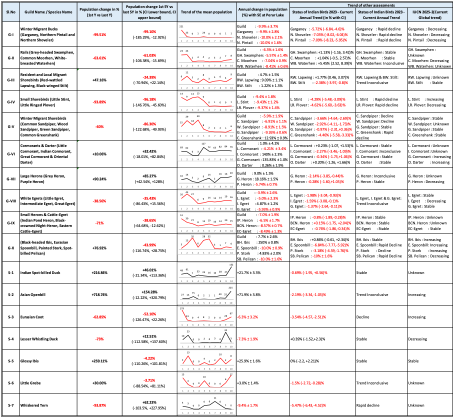
Table 6. Population decline in waterbirds of Perur Lake.
|
Guild / Species No. |
Status of waterbirds |
Total species |
Range of population decline in
% (1st 5 years vs last 5 years) |
|
Guild I, IV and V |
WM |
9 |
86% to 99% |
|
Guild II, X and S-3 |
R, LM |
8 |
43% to 61% |
|
Guild III, VIII and IX |
R, LM |
8 |
24% to 38% |
|
S-5 and S-6 |
R, LM |
2 |
3% to 4% |
Table 7. Negative
impact of commercial fishing on waterbirds of
the lake.
|
Period |
Number of surveys |
Average number of waterbird species per month |
Average number of waterbirds per month |
Average number of winter ducks,
winter shorebirds |
|
May 2014 to Sep 2018 (Before commercial fishing) |
49 |
20 |
373 |
92 |
|
Oct 2018 to Apr 2024 (Since commercial fishing) |
59 |
18.5 |
313 |
11 |
|
Decrease |
- |
7.5% |
16% |
88% |
Table 8. Negative
impact of road expansion on waterbirds in the periphery of
the lake.
|
Period |
Number of surveys |
Average number of waterbird species per month |
Average number of waterbirds per month |
Average number of rails |
Average number of Eurasian Coot |
Average number of Little Grebe |
|
Mar 2019 to Feb 2021 (during road expansion) |
21 |
17 |
177 |
2 |
1 |
0.1 |
|
Mar 2021 to Apr 2024 (After
road expansion) |
33 |
19 |
394 |
6 |
34 |
9 |
|
Increase in % after cessation
of disturbance due to road expansion |
- |
12% |
123% |
300% |
3400% |
8900% |
For images
- - click here for full PDF
References
Adhurya, S., S. Adhurya
& U.S. Roy (2019). Rapid degradation of wetlands and its impact on avifauna: A case study
from Ambuja Wetland, West Bengal, India. Indian
BIRDS 15 (2): 43–48.
Ali, S. &
S.D. Ripley (1968a). Handbook of the Birds of India and Pakistan Together with Those of
Nepal, Sikkim, Bhutan and Ceylon, Vol. 1: Divers to Hawks, 2nd
Edition. Oxford University Press, Bombay, 384 pp.
Ali, S. &
S.D. Ripley (1968b). Handbook of the Birds of India and Pakistan Together With Those of
Nepal, Sikkim, Bhutan and Ceylon, Vol. 2: Megapodes to Crab
Plovers, 2nd Edition. Oxford University Press, Bombay,
347 pp.
Ali, S. &
S.D. Ripley (1968c). Handbook of the Birds of India and Pakistan Together With Those of
Nepal, Sikkim, Bhutan and Ceylon, Vol. 3: Stone Curlews to Owls,
2nd Edition. Oxford University Press, Bombay, 327 pp.
Ali, S. &
S.D. Ripley (1968d). Handbook of the Birds of India and Pakistan Together With Those of
Nepal, Sikkim, Bhutan and Ceylon, Vol. 4: Frogmouths to Pittas,
2nd Edition. Oxford University Press, Bombay, 267 pp.
Ali, S.
(2002). The book
of Indian Birds, 13th Revised Edition. Oxford University Press,
New Delhi, 326 pp.
Biggs, R.,
F.R. Westley & S.R. Carpenter (2010). Navigating the back loop:
fostering social innovation and transformation in ecosystem management. Ecology
and Society 15(2): 9. http://www.ecologyandsociety.org/vol15/iss2/art9/
Byju, H., S. Balachandran & S.
Ravichandran (2023). Long-term population trends of migratory shorebirds: a case study from
Manoli Island, the Gulf of Mannar
Biosphere Reserve, India. Advances in Zoology and Botany 11(6): 443–453.
https://doi.org/10.13189/azb.2023.110605
Byju, H., H. Maitreyi,
S. Ravichandran & N. Raveendran (2024a). Avifaunal diversity and
conservation significance of coastal ecosystems on Rameswaram Island, Tamil
Nadu, India. Journal of Threatened Taxa 16(12): 26198–26212. https://doi.org/10.11609/jott.9248.16.12.26198-26212
Byju, H., H. Maitreyi,
N. Raveendran & N.R. Vijayan (2024b). Avifaunal diversity assessment
and conservation significance of Therthangal Bird
Sanctuary, Ramanathapuram, Tamil Nadu: insights about
breeding waterbirds. Journal of Threatened Taxa 16(9):
25802–25815. https://doi.org/10.11609/jott.8999.16.9.25802-25815
Byju, H., H. Maitreyi,
R. Natarajan, R. Vijayan & B.A.V. Maran (2025). The avifauna of Ramanathapuram, Tamil Nadu along the southeast coast of
India: waterbird assessments and conservation
implications across key sanctuaries and Ramsar sites.
PeerJ 13: e18899. https://doi.org/10.7717/peerj.18899
Chandra, R.,
K.A. Nishadh, & P.A. Azeez (2009). Monitoring water quality of
Coimbatore wetlands, Tamil Nadu, India. Environmental Monitoring and
Assessment 169: 671–676. https://doi.org/10.1007/s10661-009-1206-0
Evans, K.L.,
S.E. Newson & K.J. Gaston (2008). Habitat influences on urban
avian assemblages. Ibis 151: 19–39. https://doi.org/10.1111/j.1474-919X.2008.00898.x
Fluet-Chouinard, E., B.D. Stocker, Z.
Zhang, A. Malhotra, J.R. Melton, B. Poulter, J.O. Kaplan, K.K. Goldewijk, S. Siebert, T. Minayeva,
G. Hugelius, H. Joosten, A. Barthelmes,
C. Prigent, F. Aires, A.M. Hoyt, N. Davidson, C.M.
Finlayson, B. Lehner, R.B. Jackson & P.B. McIntyre (2023). Extensive global wetland loss
over the past three centuries. Nature 614: 281–286. https://doi.org/10.1038/s41586-022-05572-6
Fraixedas, S., A. Lindén,
M. Piha, M. Cabeza, R. Gregory & A. Lehikoinen (2020). A state-of-the-art review on
birds as indicators of biodiversity: advances, challenges, and future
directions. Ecological Indicators 118: 106728. https://doi.org/10.1016/j.ecolind.2020.106728
Frazier, S.
(1999). Ramsar sites overview: a synopsis of the world’s wetlands
of international importance. Wetlands International, pp. i–vi, 1–42.
Government of
Tamil Nadu (2022). Notification of intention to constitute Nanjarayan
Tank Birds Sanctuary [G.O. (Ms.) No. 227, Environment, Climate Change and
Forests (FR.5) Dept.]. Tamil Nadu Government Gazette, Part II — Section
2, No. 40. Accessed on 5.viii.2025.
Government of
Tamil Nadu (2022). Tamil Nadu Wetlands Mission: Mission Document on Wetlands and
Livelihood. Department of Environment, Climate Change and Forests,
Government of Tamil Nadu, Chennai, India, 113 pp.
Gregory,
R.D., D. Noble, R. Field, J. Marchant, M. Raven & D.W. Gibbons (2003). Using birds as indicators of
biodiversity. Ornis Hungarica 12–13: 11–24.
Gregory, R.D.
& A. Van Strien (2010). Wild bird indicators: using
composite population trends of birds as measures of environmental health. Ornithological
Science 9: 3–22. https://doi.org/10.2326/osj.9.3
Grimmett, R., C. Inskipp
& T. Inskipp (2011). Birds of the Indian Subcontinent. Oxford University Press,
London, 528 pp.
Guptha, M.B., L. Vijayan, S. Sandaliyan & N. Sridharan
(2011). Status of
wetlands and wetland birds in Coimbatore, Trichy, Perambalore
and Thiruvarur districts in Tamil Nadu, India. World
Journal of Zoology 6(2): 154–158.
Hayman, P.,
J. Marchant & T. Prater (1986). Shorebirds — An Identification Guide.
Houghton Mifflin Company, Boston, 412 pp.
IPCC (2021): Climate change 2021: the physical science basis. Contribution
of working group to the Sixth Assessment Report of the Intergovernmental Panel
on Climate Change. Cambridge University Press, Cambridge, United Kingdom and
New York, USA, pp. 3–32. https://doi.org/10.1017/9781009157896.001
IUCN (2025). The IUCN Red List of
Threatened Species. Version 2025–2. https://www.iucnredlist.org. Accessed
on 15.ii.2026.
Kazmierczak, K. (2000). A Field Guide to the Birds of
the Indian Subcontinent. Yale University Press, New Haven & London, 352
pp.
Khan, T.N.,
A. Sinha & P. Hazra (2016). Population trends and community
composition of migratory waterbirds in three emerging
wetlands of global significance in southwestern Bengal, India. Journal of
Threatened Taxa 8(3): 8541–8555. https://doi.org/10.11609/jott.2652.8.3.8541-8555
Kumar, C.N.,
R. Revathi, I. Jaisankar, K. Baranidharan
& P.D. Rasu (2014). Avifaunal diversity of Ukkadam Lake in Coimbatore District of Tamilnadu
(India). Indian Forester 140(10): 982–987.
Kumar, S.N.,
R. Muraleedharan, R. Kalyani, H. Maitreyi
& H. Byju (2025). Avifaunal diversity of Chinnavedampatti Lake: an urban wetland in Coimbatore,
Tamil Nadu, India. Journal of Experimental Zoology India 28(2):
1383–1395. https://doi.org/10.51470/jez.2025.28.2.1383
Lees, A.C.,
L. Haskell, T. Allinson, S.B. Bezeng,
I.J. Burfield, L.M. Renjifo,
K.V. Rosenberg, A. Viswanathan, & S.H.M. Butchart (2022). State of the world’s birds. Annual
Review of Environment and Resources 47: 231–260. https://doi.org/10.1146/annurev-environ-112420-014642
Lorenzón, R.E., A.H. Beltzer,
P.M. Peltzer, P.F. Olguin, E.J. León, L. Sovrano & A.L. Ronchi-Virgolini
(2017).
Habitat-mediated influence of water-level fluctuations on waterbird
occurrence in floodplain wetlands of the Parana River, Argentina. River
Research and Applications 33: 1494–1505. https://doi.org/10.1002/rra.3199
Millennium
Ecosystem Assessment (2005a). Ecosystems and Human Well-being: Opportunities and
Challenges for Business and Industry. World Resources
Institute, Washington, DC, USA, 32 pp.
Millennium
Ecosystem Assessment (2005b). Ecosystems and Human Well-being: Wetlands and Water
Synthesis. World Resources Institute, Washington, DC, USA, 68 pp.
Mohanraj, R., M. Sathishkumar,
P.A. Azeez & R. Sivakumar (2000). Pollution status of wetlands in
urban Coimbatore, Tamilnadu, India. Bulletin
of Environmental Contamination & Toxicology 64(5): 638–643.
Mundkur, T., A. Ananzeh,
A. Chaudhary, M. Evans, Y. Jia, A. Koshkina, R.
Kumar, J. Nergui, R. Niven, M. Rao, T. Scott &
M.A. Taq (2023). Central Asian Flyway — situation
analysis: the status of migratory birds and their habitats and recommendations
for their conservation. BirdLife International, Cambridge, 67 pp. https://doi.org/10.13140/RG.2.2.32281.80480
National
Green Tribunal (2024). Suo motu cognizance in O.A. No. 84 of 2024.
National Green Tribunal (Principal Bench), New Delhi. https://greentribunal.in/.
Accessed on 29.vii.2025
O’Connell, M.
(2000). Threats to waterbirds and wetlands: implications for conservation,
inventory and research. Wildfowl 51: 1–16.
Parameswaran, G. & R. Sivashankar (2018). The composition
and status of waterbirds of Perur
Lake in Tamil Nadu, India. Journal of Threatened Taxa 10(11):
12464–12488. https://doi.org/10.11609/jott.3864.10.11.12464-12488
Parameswaran, G., R. Sivashankar&
R. Vridhi (2023a). Rapid decline of
waterbirds in urban wetlands: a case study from Perur-Sundakamuthur Lake, Coimbatore, Tamil Nadu, India. Indian
BIRDS 19(3): 67–74.
Parameswaran, G., R. Sivashankar
& R. Vridhi (2023b). Coimbatore’s Perur lake: from bird sanctuary to a fish farm? Bird Count
India. https://birdcount.in/wetland-bird-count-perur-lake-2/. Accessed on
14.vii.2025.
Parameswaran, G., R. Sivashankar
& R. Vridhi (2025). An annotated
checklist based on a decadal study on the waterbirds
in Perur-Sundakamuthur Lake, Coimbatore, Tamil Nadu,
India (Supplementary). Zenodo 2025:
1–30. https://doi.org/10.5281/zenodo.17644472
Paulson, D.
(2005). Shorebirds of
North America: the Photographic Guide. Christopher Helm, London, 361
pp.
Pearce, C.M.,
M.B. Green & M.R. Baldwin (2007). Developing habitat models for waterbirds in urban wetlands: a log-linear approach. Urban
Ecosystems 10: 239–254. https://doi.org/10.1007/s11252-007-0026-7
Pragatheesh, A. & P. Jain (2013). Environmental degradation of
the Coimbatore wetlands in the Noyyal River basin.
EIA Resource and Response Centre, Nilgiri, Tamil
Nadu, India, 57 pp.
Raju, S.
(2015). Population
trend of the common birds in a residential area of Thiruvananthapuram City,
Kerala. Indian BIRDS 10(2): 40–45.
Rasmussen,
P.C. & J.C. Anderton (2012). Birds of South Asia: The Ripley Guide,
Vol. 2, 2nd Edition. National Museum of Natural History,
Smithsonian Institution & Lynx Edicions,
Washington D.C. & Barcelona, 683 pp.
Reginald,
J.L., C. Mahendran, S.S. Kumar & P. Pramod (2007). Birds of Singanallur
Lake, Coimbatore, Tamil Nadu. Zoo’s Print Journal 22(12): 2944–2948. https://doi.org/10.11609/JoTT.ZPJ.1657.2944-8
Şekercioğlu, Ç.H., G.C. Daily & P.R.
Ehrlich (2004). Ecosystem
consequences of bird declines. Proceedings of the National Academy of
Sciences of the United States of America 101(52): 18042–18047. https://doi.org/10.1073/pnas.0408049101
Şekercioğlu, Ç.H. (2010). Ecosystem functions and
services, pp. 45–72. In: Sodhi, N.S. & P.R.
Ehrlich (eds.). Conservation Biology for All. Oxford University Press,
Oxford, 341 pp. https://doi.org/10.1093/acprof:oso/9780199554232.003.0004
Şekercioğlu, Ç.H., D.G. Wenny & C.J.
Whelan (2016). Why Birds
Matter: Avian Ecological Function and Ecosystem Services. University
of Chicago Press, Chicago, 387 pp. https://doi.org/10.7208/chicago/9780226382777.001.0001
SoIB (2023). State of India’s Birds
factsheet: range, trends, and conservation status. https://stateofindiasbirds.in/species/trends-in/ca-none/habitats-none/estimated_trend-yes/.
Accessed on 03.vi.2025.
Whelan, C.J., D.G. Wenny &
R.J. Marquis (2008). Ecosystem services provided by birds. Annals of the New York Academy
of Sciences 1134: 25–60. https://doi.org/10.1196/annals.1439.003